

I. Introduction: Answering the Core Question
The question, “What is modified food starch made from?” is fundamental to understanding this versatile food ingredient. For manufacturers, the raw material dictates performance; for consumers, it informs dietary choices and perceptions of the product’s origin.
1.1 Core Definition and Purpose
Modified food starch is not a finished product of a specific plant, but rather a final ingredient resulting from the physical, chemical, or enzymatic treatment of a native starch. This process enhances the starch’s stability and functionality. The raw material serves as the building block upon which these crucial modifications are built.
1.2 Key Motivations for Source Inquiry
Users typically inquire about the source for several key reasons:
- Acceptability: Does the source align with my specific diet (e.g., non-grain, non-GMO preference)?
- Quality: How does the source impact the ingredient’s overall performance and purity?
- Cost: Raw material availability affects the final cost of the food product.
II. The Primary Raw Materials: A Deep Dive
Modified starches are derived from a diverse array of crops, each offering a unique set of properties due to differences in their amylose and amylopectin content.
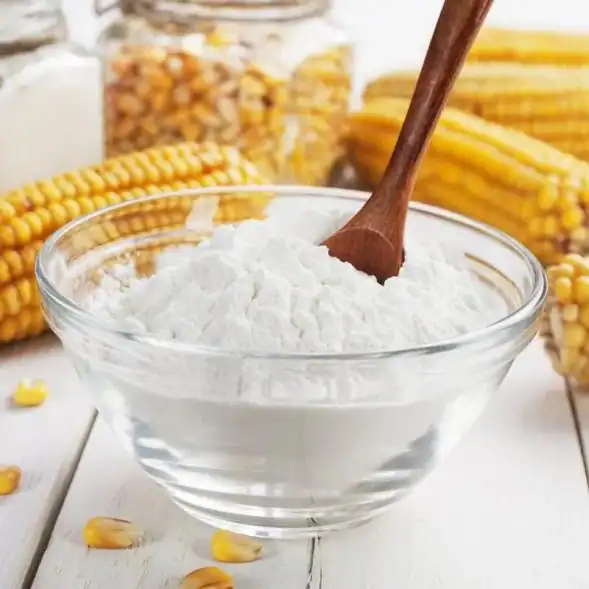
2.1 Corn Starch (Maize) – The Workhorse of the Industry
- Characteristics: Corn starch is the most widely utilized source globally, prized for its high yield, consistent supply, and cost-effectiveness. It is rich in both amylose and amylopectin.
- Consumer Consideration: Corn is a major commodity crop, often subject to discussions regarding $\text{GMO}$ status. While the modification process purifies the starch, its origin remains a key factor for consumers seeking non-$\text{GMO}$ or specific sourcing certifications.
- Performance Profile: Its granules are small, and it offers moderate viscosity. It is highly versatile and serves as the base for many common cross-linked and stabilized starches.
2.2 Tapioca Starch – The Clean-Label Favorite
- Characteristics: Derived from the cassava root, tapioca is an excellent source for manufacturers targeting a “clean label” or non-grain positioning. It is naturally high in amylopectin.
- Consumer Consideration: Tapioca is often favored in specialty diets due to its natural, non-grain origin, contributing to its high acceptance in the market.
- Performance Profile: Tapioca starch is known for producing a clear, glossy paste (high transparency) and a soft, chewy texture. It is a preferred ingredient in sauces, clear fillings, and for providing elasticity in baked goods.

2.3 Potato Starch – The High-Performance Thickener
- Characteristics: Extracted from potato tubers, this starch is characterized by large granule size and a naturally higher concentration of phosphate groups ($\text{P}$).
- Consumer Consideration: It is typically sourced from non-$\text{GMO}$ crops and is popular in regions with strong potato agriculture.
- Performance Profile: Potato starch hydrates and gelatinizes at a lower temperature than corn starch. It yields an extremely high viscosity and strong, elastic texture, making it ideal for products requiring significant thickening power and excellent water-binding capacity.
2.4 Wheat Starch – The Traditional Grain Source
- Characteristics: Extracted from the wheat endosperm, it is a traditional ingredient, often separated during the production of gluten (vital wheat gluten).
- Performance Profile: It is valued for its ability to provide structure and binding in certain bakery and meat applications.
2.5 Specialty and Niche Sources
- Rice Starch: Its fine particle size gives it a unique, smooth, almost powdery mouthfeel, making it ideal for baby food and delicate sauces where a minimal texture impact is desired.
- Pea Starch: Extracted from yellow peas, it has gained popularity due to its high amylose content and its association with the growing plant-based protein market. It is often used for texture in vegetarian products.
III. Criteria for Source Selection: A Manufacturer’s View
A food manufacturer’s decision to use one starch source over another is a calculated balance of technical performance, market positioning, and economic feasibility.
3.1 Cost and Supply Stability
Corn starch often remains the default choice due to the massive scale and stability of global corn production, ensuring reliable supply and low cost. Specialty starches, like tapioca or pea, may command a premium reflecting their smaller supply chains and unique market appeal.
3.2 End-Product Performance Requirements
The most critical factor is the required function in the final food matrix:
- High Transparency/Gloss: If the finished product needs to be clear (e.g., fruit glaze), Tapioca is usually favored over the more opaque Corn starch.
- High Viscosity/Structure: For products demanding strong binding and thickening in a short time (e.g., certain processed meats), Potato starch is often superior.
- Low Retrogradation/Freeze-Thaw Stability: The choice of source will affect how well the starch holds up to freezing and thawing without “weeping” (syneresis).
3.3 Regulatory and Labeling Considerations
The source directly impacts consumer-facing labels: manufacturers catering to “non-GMO” markets must ensure their modified starches are derived from validated non-$\text{GMO}$ sources (e.g., certified non-$\text{GMO}$ corn or potato).
IV. The Role of Modification vs. Raw Material
It is important to distinguish between the raw material and the modification process.
- Source Sets the Baseline: The native properties of the starch (its granule size and amylose/amylopectin ratio) establish the baseline performance.
- Modification Fine-Tunes: The modification (cross-linking, stabilization, pre-gelatinization) then amplifies or corrects the baseline properties to fit the specific processing challenge. For instance, you might choose cross-linked corn starch for heat resistance, or cross-linked tapioca for heat resistance and clarity.
Crucially, regardless of the source, the final modified starch ingredient undergoes extensive washing and purification, rendering it a highly refined, high-purity carbohydrate.
V. Conclusion: The Science of Starch Selection
The question, “What is modified food starch made from,” reveals the sophisticated intersection of agricultural supply, food science, and consumer demand. The source material is the foundational element that determines the specialized functional role the modified starch will play in your product.
Understanding the unique attributes of corn, tapioca, potato, and other starches allows manufacturers to make informed decisions that optimize texture, stability, cost, and label appeal.
📞 Partner with Our Starch Experts Today
Are you a food scientist or procurement specialist seeking the perfect starch to solve your most complex formulation challenges?
Selecting the right modified starch is a strategic decision that affects everything from product cost to mouthfeel and shelf life.
If you require in-depth technical data, customized sample testing based on specific raw materials, or specialist guidance on optimizing a product for a “cleaner” label (e.g., transitioning from corn to tapioca), please contact our dedicated technical sales team.
Let us help you leverage the precise properties of each raw material to achieve your desired product outcome.
[Click Here to Schedule a Consultation with Our Raw Material Specialists]