
Introduction: E1412 viscosity above 700 BU, pH 5.0–7.0, and DS 0.01–0.075 define a practical starting window for sauce thickening, pumping, cling, and emulsion stability trials.
E1412 viscosity above 700 BU, pH 5.0–7.0, and DS 0.01–0.075 define the working window for sauce thickening, cling, pumping, and emulsion stability. In condiment and emulsified beverage trials, these values matter as a system. A tomato ketchup or emulsified drink can look fine in a beaker and still thin at the pump, in a holding tank, or after filling. Formulators comparing an e1412 starch with other thickeners need to know whether it will hold body through heating, acid addition, and transfer—and at what use level. Read paste viscosity, pH, and DS together before setting trial parameters.
Why Sauce Viscosity Changes During Pumping and Heating
Viscosity in a finished sauce comes from swollen, hydrated starch granules that remain intact through processing. Native tapioca starch swells readily, but its granules are fragile. Under heat and shear they rupture, release amylose, and produce a thin, stringy body that does not fully recover. Cross-linked distarch phosphate is built to resist that breakdown. Phosphate bridges reinforce the granule, allowing it to swell without disintegrating. That structure explains why an E1412 starch with viscosity above 700 BU can maintain a more predictable body through transfer pumps, colloid mills, and high-pressure homogenizers. Heat is the second pressure point. During batch hydration and cooking, granules absorb water and the paste thickens. Holding the paste too long at 90 °C with strong agitation can still cause mechanical breakdown. Cooling is equally important because much of the final cling and body develops as the sauce drops below 40 °C. A ketchup that looks thin and glossy at 85 °C may set into the target texture after cooling and several hours of rest. Judging viscosity only on a hot sample can lead to an incorrect dose. Acid is the third factor. Tomato sauces and many condiments sit on the acid side, especially after vinegar or citric acid addition. Acid plus heat gradually hydrolyzes starch chains and erodes viscosity over shelf life. Cross-linking slows that attack, which is why the pH range on the specification matters in sauce design.
How Viscosity, pH, and DS Shape E1412 Performance in Sauces
TAICHY Starch supplies E1412 Distarch Phosphate, a food-grade modified tapioca starch for sauces, tomato ketchup, and emulsified beverages. Its specification includes starch content ≥85%, viscosity >700 BU, pH 5.0–7.0, and DS 0.01–0.075. Each value answers a different sauce question; read them together to set dose, process order, and texture target.
1. Viscosity and pH Should Be Read Together in Sauce Trials
The >700 BU value indicates a grade that builds a strong paste at a modest use level. In sauce work, that reserve helps you reach target body without adding so much starch that flavor release becomes muted. It also gives you more body to lose at the pump or during a long hot hold before the sauce reads thin. The pH 5.0–7.0 range is the product specification window for predictable hydration and dispersion behavior. A tomato sauce that naturally sits at pH 4.2–4.8 is outside that band, so plan for acid addition carefully. Hydrate the starch fully in the neutral or mildly acidic phase, then add acid-heavy components and confirm viscosity after the full acid load is in. Emulsified drinks and white sauces that land between pH 5.5 and 6.8 sit inside the range and usually hydrate without surprises. Finished-formula testing still matters because total solids, acid level, shear, heating, and other hydrocolloids change the result.
2. Degree of Substitution Affects Cross-Link Density and Texture
Degree of substitution describes how many phosphate groups have attached to the starch molecule. In the DS 0.01–0.075 band, cross-linking is strong enough to protect granules without making the paste rigid or rubbery. Lower in the band, the body is softer and more flowable, which suits pouch-packed sauces, dipping sauces, and emulsified drinks where clean mouthfeel matters more than cling. Toward the upper end, the granule holds together through more shear and heat, giving firmer body and better cling for ketchup, barbecue-style sauces, and products that pass through long transfer lines or are filled hot. Texture is the practical read-out: higher DS can make sauce short and slightly gummy; lower DS improves flow but reduces tolerance to the line.
How to Match E1412 Trials to Tomato Sauce and Emulsified Drinks
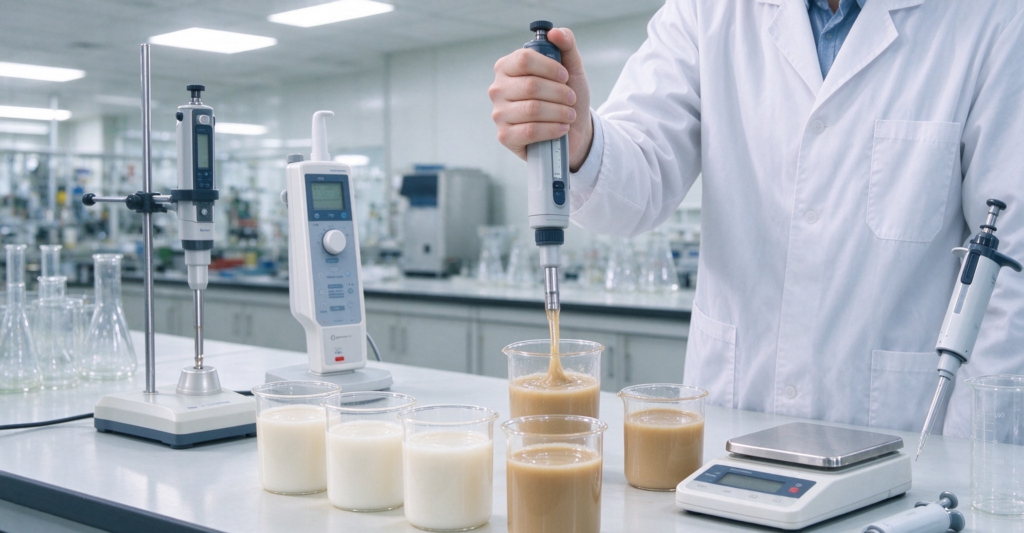
Build process steps into the trial instead of judging one beaker sample. Start with a dosage ladder, commonly three or four starch levels spanning a practical range. Make each batch identically: disperse the E1412 in cold water or a cold aqueous phase first, heat to full pasting with controlled agitation, add salt, sugar, and acids, hold at process temperature for the same time on every batch, homogenize if the line does, then cool and fill. Measure viscosity at process temperature and again at 25 °C after 24 hours. The cooled reading better represents what the consumer experiences. For tomato sauce, watch three things beyond viscosity: serum separation after 7 and 14 days at ambient and at 30–35 °C; cling on a glass or spoon after cooling; and flavor. A faint serum ring can be normal at high total solids, but a clear watery layer signals that the formula needs more starch or a tighter cross-link. High-viscosity starch at a lower dose usually keeps tomato notes brighter than a heavy dose of a weaker grade. For emulsified drinks and pourable dressings, the priority shifts to emulsion stability and flow. Run the same dosage ladder, homogenize at the pressure your line uses, and check for oil-ring formation and sediment over a week. A starch that thickens well but destabilizes the emulsion will show up quickly in those samples. E1412 supports viscosity in the continuous phase so droplets stay suspended and the drink still pours and pumps cleanly. Performance depends on total solids, acid level, shear, heating profile, and other hydrocolloids. Treat the TAICHY product data values as starting points for trial design and confirm them in your sauce.
Conclusion
For sauce and emulsified beverage work, the E1412 specification is a compact decision tool. Viscosity above 700 BU signals a grade with enough body to survive pumping and hot holds. pH 5.0–7.0 shows where hydration behaves predictably and where acid should be added later in the process. DS 0.01–0.075 lets you tune between soft, flowing texture and firm cling with stronger shear tolerance. Set the trial around those three variables, measure on cooled samples, and watch serum separation and cling as well as viscometer readings. TAICHY Starch can supply E1412 with batch COA and health certificate support, and a standard lead time of 10–15 days after order confirmation and payment. As a modified starch manufacturer, we can review your total solids, target pH, process temperature, and shear conditions to confirm the right grade and delivery schedule for your line.
FAQ
Q: What does a viscosity above 700 BU mean for sauce pumping?
A: It means the starch builds a strong paste at a low use level and has reserve body before the sauce reads thin. Cross-linked granules resist rupture under pump shear and hot holding, so the sauce is less likely to lose body permanently. Measure viscosity after your own pump and filling step because line shear and hold time vary by plant.
Q: How does pH 5.0–7.0 affect E1412 use in tomato sauces?
A: That range describes where the powder hydrates predictably and holds body. Tomato sauce typically sits lower, around pH 4.2–4.8, so hydrate the starch and build body first, then add acid-heavy components and recheck viscosity after the full acid load. Cross-linking in E1412 slows acid-and-heat thinning, which can help ketchup and vinegar-based sauces hold texture through shelf life.
Q: How should sauce formulators choose a degree of substitution range for E1412?
A: Start from the texture and process you need. Lower DS within the 0.01–0.075 band gives softer, more flowable body for pouch sauces and emulsified drinks; higher DS gives firmer cling and better tolerance to long transfer lines and hot filling. Run a dosage ladder and compare cooled viscosity, serum separation, and mouthfeel after a week. Where grade options are available, compare the lower and upper part of the range rather than assuming one point will fit every sauce.
Sources / References
Additives | Food Standards Australia New Zealand