
Introduction: Oil and water separate in sauces and dressings for understandable reasons, and modified starch acts on three of them: the interface, the droplet size, and the storage gel.
A bottle of creamy dressing can look perfect on the day it is made and show a thin oil ring three weeks later in the refrigerator. That gap between how a recipe looks in the mixing bowl and how it looks on a shelf is the whole story of emulsion stability. For anyone learning sauce and dressing formulation, the useful question is not whether a product separates, but which part of the system let it happen: the oil-water interface, the droplet size the homogenizer produced, or the gel network that holds everything in place during cold storage. Those three linked points explain most separation problems in this category, and they also explain where modified starch earns its place in the formula.
Why Sauces and Dressings Separate During Storage
A sauce or dressing is an oil-in-water emulsion. The oil sits as tiny droplets — the dispersed phase — inside a water-based liquid of vinegar, water, stock, or syrup, which is the continuous phase. Oil is lighter than water, so every droplet is quietly trying to rise. What holds it in place is a thin film of emulsifier wrapped around each droplet, plus the thickness of the surrounding liquid. When that film thins or breaks, droplets merge into larger ones, and larger droplets rise much faster. That is the oil ring you see on top of an old bottle of vinaigrette. Storage adds two slower pressures. Cold temperatures thicken the continuous phase, which slows creaming, but they also push starch chains to re-associate as the gel network ages — the same process that makes refrigerated starch gels weep. Temperature swings make it worse: every warm spell lets droplets move and collide more freely, and every cold spell squeezes water out of the network. This is why some dressings show a clear oil layer on top while others show a watery layer at the bottom, and some show both at once. Acid adds another pressure, because low pH attacks the hydrated starch structure that gives the water phase its body.
How Modified Starch Supports Emulsion Stability in These Systems
OSA modified starch — starch sodium octenyl succinate, the additive coded E1450 — carries octenyl succinate groups attached along a starch backbone. Those groups are hydrophobic and push into the oil droplet, while the starch chain stays hydrated in the water. The result is an amphiphilic molecule that sits at the oil-water boundary and forms a film around each droplet. Because the starch portion is large and water-loving, it also creates a bulky layer that keeps droplets from crowding close enough to merge. On top of that, the same starch thickens the continuous phase and builds a weak gel network, so droplets have less room to move. Emulsifying and thickening are not two separate jobs here; they reinforce each other.
1. How Homogenization Shear Affects Droplet Size Before Storage
Homogenization turns a rough oil-and-water mix into a fine emulsion, and the amount of shear decides how small the droplets become. Strong shear breaks the oil into many small droplets and spreads their total surface area across the system. Small droplets rise slowly and are easy for the starch film to hold. Gentle shear leaves larger droplets with less total surface area, and those rise quickly no matter how good the emulsifier is. The practical lesson for formulation learners is that shear and emulsifier have to match: a system with plenty of E1450 but light mixing can still separate, and a system with strong shear but too little interfacial material leaves droplets partly uncovered, so they merge again soon after the run.
2. Why Storage Temperature and pH Still Shape Final Emulsion Behavior
Refrigeration helps and hurts at the same time. Cold liquid is more viscous, so droplets move slowly and creaming slows down, but cold also accelerates starch retrogradation and water release, and the warming and cooling that happens during shipping and retail display keeps stressing the network. pH matters just as much. Many sauces and dressings are acidic, and acid gradually shortens the hydrated chains that form the protective layer, so an emulsion that behaves well at neutral pH can thin out in a vinegar-based recipe. Oil phase level, salt, sugar, and filling temperature shift the balance too, which is why two formulas using the same starch dose can age very differently.
What Modified Starch Can and Cannot Resolve in a Sauce Formula
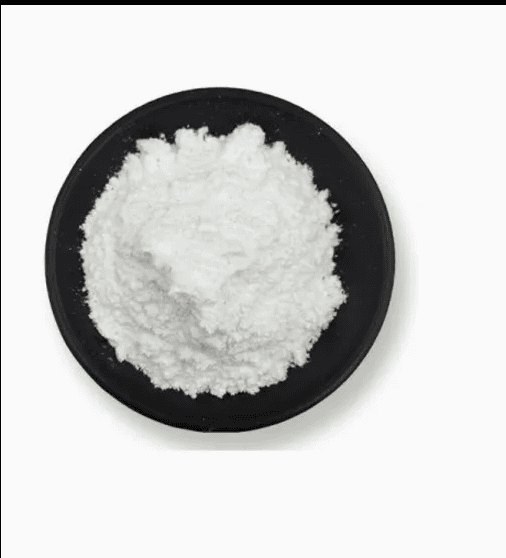
Modified starch, and OSA starch in particular, addresses the two main failure points directly. It puts a protective film at the oil-water interface so droplets resist merging, and it thickens the continuous phase and builds a gel network so droplets move more slowly. That combination is why modified starch sits at the center of so many sauce and dressing formulas. A clear example is TAICHY Starch E1450, a food-grade modified starch powder whose documented application directions include sauces and dressings, with support for maintaining uniform viscosity under refrigerated and fluctuating storage conditions while reducing oil-phase separation risk. It is supplied as a powder with customized packaging support for industrial buyers. It is still one part of a stabilizing system, not the whole system. Oil phase level, homogenization strength, pH, and storage temperature all shape the final result, and no single ingredient keeps an emulsion intact under every condition. Thickening can also hide a weak interface rather than fix it: a very viscous sauce may look even while droplets are quietly merging underneath, and the separation shows up later as a sudden oil release. Because substitution degree and viscosity values are not published for this grade, matching it to a specific sauce or dressing formula is best done with a sample trial under realistic process and storage conditions. Results depend on the formulation, not on the starch alone.
Conclusion
Sauce and dressing separation always comes back to three questions: is each oil droplet properly covered, are the droplets small enough to rise slowly, and does the continuous phase stay thick and hydrated through cold storage and temperature swings. Modified starch such as E1450 works on all three at once, stabilizing the interface while thickening the water phase and helping hold the gel network together. It is still one component of a formula, and pH, oil level, homogenization strength, and storage conditions decide how far that help reaches. Understanding the split makes it easier to look at a separating bottle and know which part of the recipe to adjust next.
FAQ
Q:Why do oil-based sauces separate even when the recipe looks homogeneous at first?
A:Because “homogeneous” only describes the moment right after mixing. A fresh emulsion has small droplets coated by whatever emulsifier is present, and it looks even. Over days and weeks, droplets collide, the interfacial film thins, and merged droplets rise faster. The continuous phase changes too, as the starch network ages and releases water. The recipe did not fail suddenly — the slow physical processes inside every emulsion simply became visible, and refrigeration, temperature swings, and acidity speed them up.
Q:How does homogenization shear change emulsion stability in dressings?
A:Shear is what breaks the oil phase into droplets in the first place. Strong shear produces many small droplets with a large total surface area, and small droplets rise slowly and stay well covered by starch. Gentle shear leaves larger droplets that rise quickly. The key is balance: there has to be enough interfacial material to cover the new surface that shear creates. When shear outruns the emulsifier, freshly exposed surfaces let droplets merge again shortly after processing.
Q:Can modified starch alone keep a dressing stable during long storage?
A:No single ingredient does that job by itself. Modified starch contributes a protective film at the interface, a thicker continuous phase, and a gel network that slows droplet movement, which covers a large share of the work. But oil level, homogenization strength, pH, and storage temperature all shape the outcome. A dressing that holds up for months usually combines the right starch dose with suitable processing and pH control. Modified starch is a strong part of that system, not a substitute for it.
Sources / References
PubMed reference on interface stability