
Introduction: A first bulk order of E1450 modified starch moves more smoothly when specifications, port paperwork, and payment terms are mapped into one timeline before the deposit goes out.
The difficult part is the middle: a specification sheet becomes a production slot, the slot becomes a container at Tianjin Port, and the container becomes a customs clearance that either moves quickly or waits. A workable order plan follows that path from first quote through repeat purchase, using the trade terms for E1450 shipped from Tianjin Port.
How Bulk Buyers Turn E1450 Specifications into an Order Plan
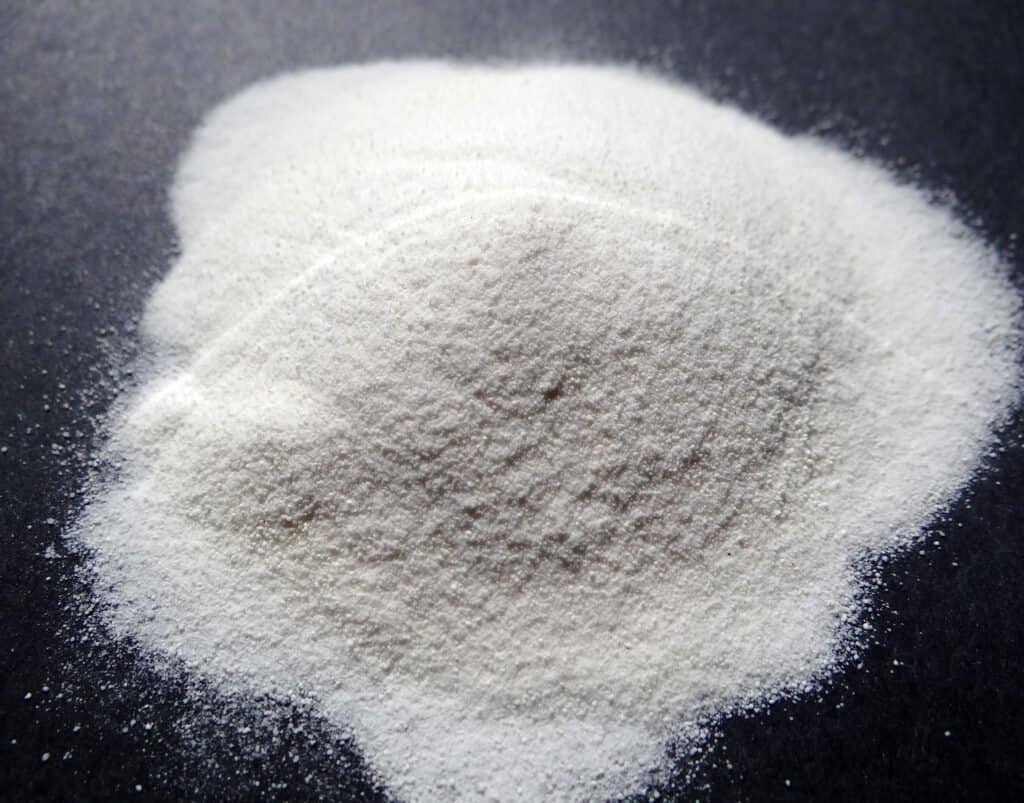
E1450, also called starch sodium octenyl succinate or OSA modified starch, is a food-grade powder with an amphiphilic structure. That structure lets it sit at the oil-water boundary and hold an emulsion, hydrate quickly into a stable viscosity, tolerate heat and mechanical shear, and retain water through repeated freeze-thaw cycles. For bulk orders, these properties determine whether a 1000 KG delivery fits a production line. A sauce or dressing plant running high-shear homogenization and hot fill needs shear tolerance and heat stability. A frozen prepared food producer needs syneresis control across repeated freeze-thaw cycles. A bakery filling producer needs water retention that survives the oven. One product code can require different order plans. Turning that match into an order means answering four questions with numbers attached. Quantity comes first: 1000 KG is the minimum order for E1450 shipped from Tianjin Port, a practical first-batch size for a plant trial that produces saleable output rather than a bench sample. Packaging comes second, and it should be settled before the purchase order because customized packaging is available; the packaging format affects receiving, storage, and how material feeds the line. Technical alignment comes third: the NPD test kitchen and lab team can discuss the target system—pH, solids level, homogenization pressure, freeze-thaw count—before a production slot is booked, so the first bulk delivery arrives as a confirmed material rather than an experiment. Labeling comes fourth. E1450 is an approved additive number in regulated markets such as the UK, and its appearance on your finished product label depends on the rules where you sell, not where you buy. Two items usually need a quick email rather than an assumption: the single-pack weight inside the 1000 KG order and the sample policy for pre-order evaluation. Both are straightforward to confirm and should not be guessed.
How Tianjin Port Shipping and Export Paperwork Affect Delivery Timing
Production for an E1450 order runs 10-15 days after order confirmation and payment. That window covers manufacturing. Delivery starts when the goods reach Tianjin Port and the booking is matched to a vessel. Between those points sits the document set, the part buyers most often underestimate. A container that arrives with incomplete paperwork will not clear, regardless of the starch inside. For bulk modified starch orders, standard export documents are prepared as a matched set:
- Commercial Invoice and Packing List. These establish declared value, quantity, and packing method. Your customs broker uses them to calculate duty and confirm that the arrival matches the declaration. A mismatch between invoice quantity and packing list detail is a common cause of clearance delay.
- Bill of Lading. Issued by the carrier, this is the cargo receipt and the document that controls release at destination. It also sits at the center of most letter of credit transactions, because banks pay against documents, not the container itself.
- COA and Health Certificate. The Certificate of Analysis gives your QA team batch-level data for incoming inspection. The Health Certificate supports food import clearance where destination rules require it.
- Certificate of Origin. Your broker uses it to determine whether a preferential duty rate applies. On larger shipments, the duty difference can outweigh the freight negotiation.
Tariff classification deserves early attention. The World Customs Organization’s Harmonized System is the framework every customs authority uses to categorize goods, and the code applied to a modified starch shipment sets the duty rate and any import restrictions. Classify before the vessel sails, not after.
How MOQ Lead Time and Payment Terms Affect Reorder Planning
Once the first order lands and performs, the question shifts from whether to buy to how to keep supply on the shelf. Three published terms drive that planning: a 1000 KG minimum order quantity, a 10-15 day production window after confirmation and payment, and a choice between T/T and L/C settlement. Together they define how far ahead you need to plan. Start from the date you need material at your filling line and subtract backward. Inland delivery from the destination port comes off first, then ocean transit, then a buffer for document turnaround and customs clearance at destination. That leaves the production window: 10-15 days after payment clears. A factory that consumes 1000 KG every six weeks and does not want more than one order of safety stock should place the next order roughly eight to ten weeks before the material is needed, depending on the sea leg to its port. Writing that trigger date into the procurement calendar turns a bulk supplier relationship into a dependable supply line. Payment terms shape cash flow. T/T is the faster route: funds move, confirmation is received, and the production clock starts. It suits repeat orders with an established supplier where both sides trust the delivery history. L/C adds a bank layer and is more comfortable when a first order is large, when buyer and supplier are new to each other, or when internal finance requires documentary control. Under an L/C, the export document set must line up exactly with the credit terms—invoice, packing list, bill of lading, COA, health certificate, and certificate of origin—so review the credit wording against the supplier’s standard document list before the L/C is issued. Packaging consistency has a quiet operational advantage across reorders. If the packaging format or handling method changes between shipments, receiving, storage, and dosing must be reset, and small format changes are a common cause of line slowdowns that nobody attributes to the starch order. Consistent packaging discipline is cheaper than chasing consistency in price.
Conclusion
Bulk E1450 supply from Tianjin Port is manageable once the sequence is clear. Match the amphiphilic, shear-tolerant, freeze-thaw-stable E1450 powder to actual processing conditions; confirm the 1000 KG minimum, the 10-15 day production window, and the packaging format before the purchase order goes out; and line up the export document set against your broker’s requirements early. Then choose T/T or L/C and set a reorder trigger based on consumption rate rather than warehouse space. TAICHY Starch, as a modified starch supplier, confirms the 1000 KG minimum, the 10-15 day production window after confirmation and payment, Tianjin Port loading, and T/T or L/C settlement in the quotation. BRCGS and GFSI-recognized standards, ISO9001, ISO22000, and KOSHER scope support the supply, and the NPD and lab team can discuss your target system before the first bulk run. Send your application details, target quantity, destination port, and preferred packaging, and we will return a quote, a production window, and the document list for your order.
FAQ
Q:What is the MOQ for bulk E1450 modified starch from Tianjin Port?
A:The minimum order quantity is 1000 KG for E1450 modified starch shipped from Tianjin Port. It is workable for a first production-scale trial and for ongoing replenishment. Packaging is customizable, so the format within that 1000 KG can be matched to how your plant receives and doses the material. Confirm the format in the first email so the quote reflects it.
Q:Which export papers are provided for bulk modified starch orders?
A:Standard export documents are the Packing List, Commercial Invoice, Bill of Lading, COA, Health Certificate, and Certificate of Origin. The COA and Health Certificate support incoming QA and food import clearance. The invoice, packing list, bill of lading, and certificate of origin handle valuation, cargo release, and duty treatment. If your destination or bank needs additional or customized documents, they can be arranged as part of the order.
Q:How should importers plan lead time for a repeat E1450 modified starch order?
A:Work backward from the date you need material on the line. Allow for inland delivery from the destination port, ocean transit on your route, a buffer for documentation and customs clearance, and the 10-15 day production window that starts after confirmation and payment. Buyers who consume steadily and hold one order of safety stock typically place a repeat order roughly eight to ten weeks ahead, adjusted for the length of the sea leg to their port.
Sources / References
What is the Harmonized System (HS)?
BRCGS Food Safety Global Standard
Approved additives and E numbers